
Beyond cattle – the outback zoo
Host: Eversleigh Station
Written by Jenny Underwood – Owner, Eversleigh Station.
As livestock producers we not only look after our cattle but we also take great care of the land. We make sure that we stock the paddocks with the right number of cattle in proportion to the amount of grass available; we ensure that native trees are left for shaded areas and along creeks, and only exotic species of plants and woody weeds are removed.
As there is no permanent water on the property, water is stored in dams. We also pump water from underground from the Great Artesian Basin, the lifeblood of inland Australia. Bore water is paramount to the survival of every living creature – man and animal. Without water from the Great Artesian Basin it is doubtful that much of inland Australia would be permanently inhabited.
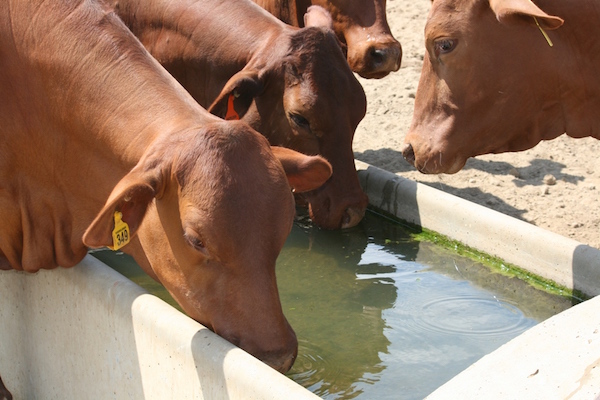 We ensure that the livestock have access to adequate clean water. The cattle troughs are cleaned regularly.
Without water living creatures would not survive. Many areas of rural Australia are still in the grip of one of the most devastating droughts in living memory. In many areas livestock are being hand-fed to keep them alive. It is hard to imagine that any other creatures would be able to survive in the almost desert-like environment.
It is amazing the number of animals, besides our Droughtmaster cattle, that live at Eversleigh. These animals share the watering points with our stock. If we didn’t provide the water, it is likely these creatures would not survive. Watching these animals, many of which are native to Australia, is fascinating and something that can only be experienced and fully appreciated when you live on the land and share their habitat with them.
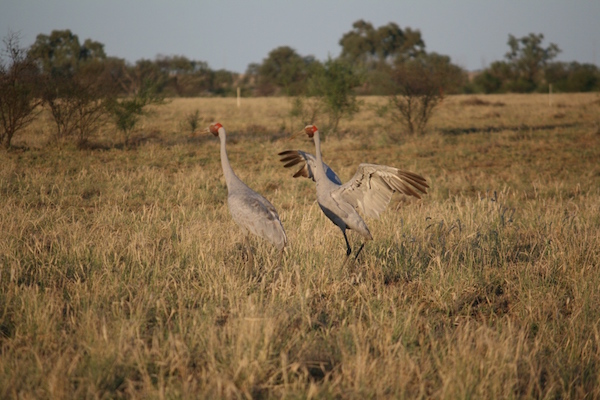 Brolgas stay with the same partner for life. The brolgas are most famous for their mating dance. The breeding season is in November or December. A pair of brolgas spread their wings and leap and dance gracefully before mating. After this, both parents share the task of feeding the chicks.
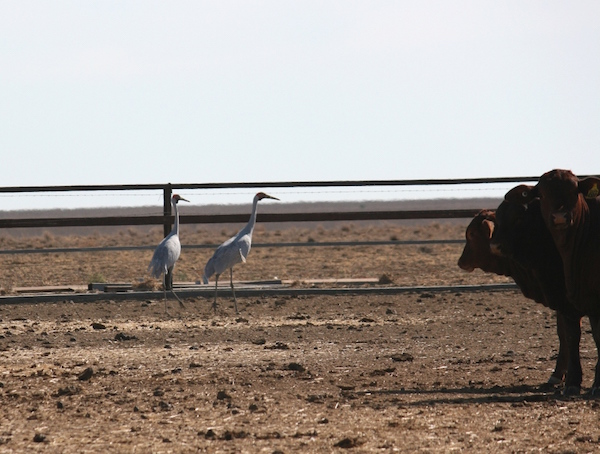 The same pair of brolgas twelve months later keeping company with some of our weaner bulls.
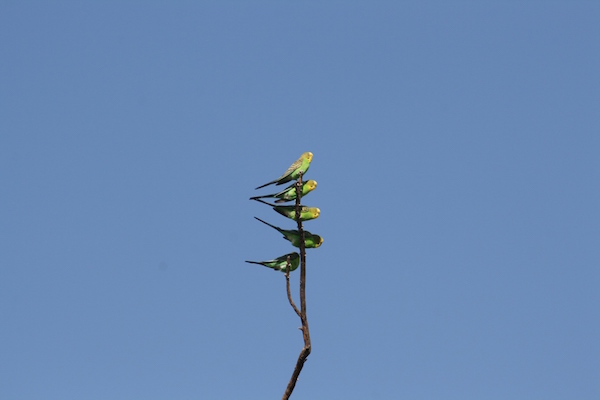 Budgerigars are found wild throughout the drier parts of Australia where the species has survived harsh inland conditions for the last five million years. Budgerigars are naturally green. They are popular pets around the world and today are the third most popular pet in the world, after the domesticated dog and cat.
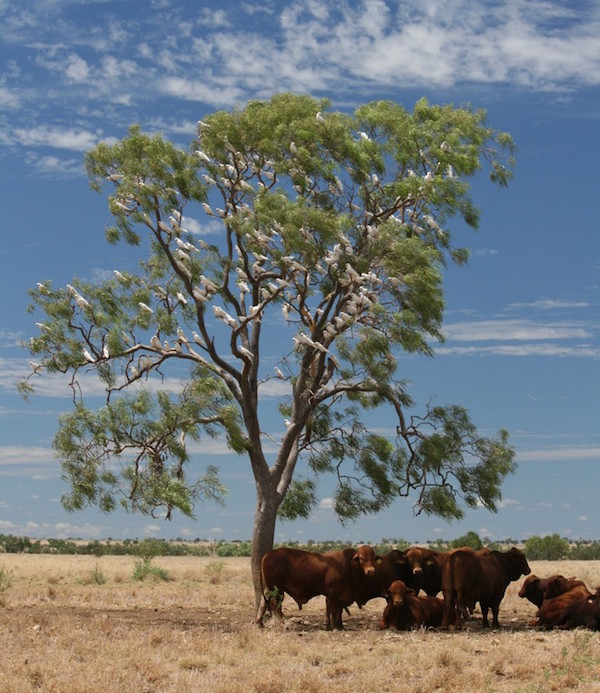 We get to see, hear, and enjoy budgerigars in their natural habitat. At certain times of the year the flocks can have 1000’s of birds in them.
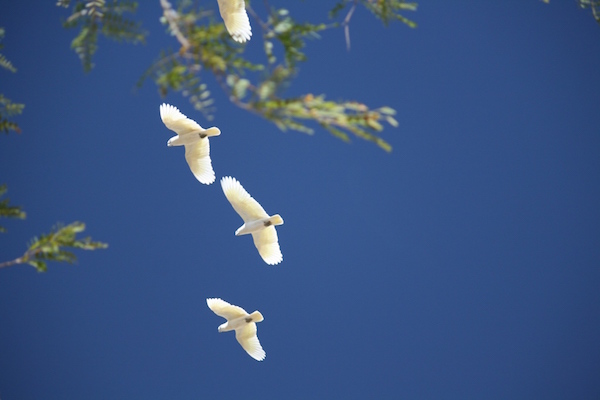 Corellas belong to the cockatoo family. They are prolific, cheeky, and very noisy, especially when we are feeding our sale bulls.
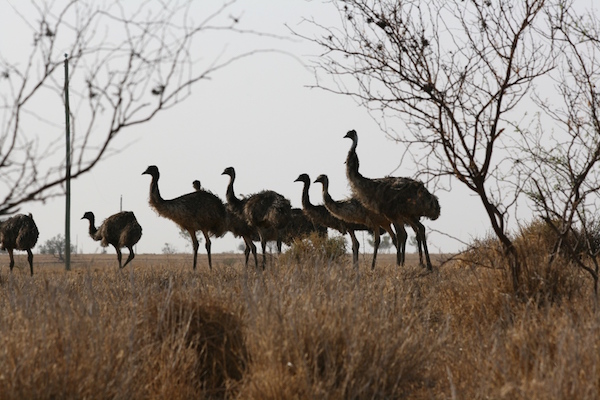
One of the most iconic birds of inland Australia is the emu – one of the two animals on the Australian coat of arms, alongside the kangaroo.
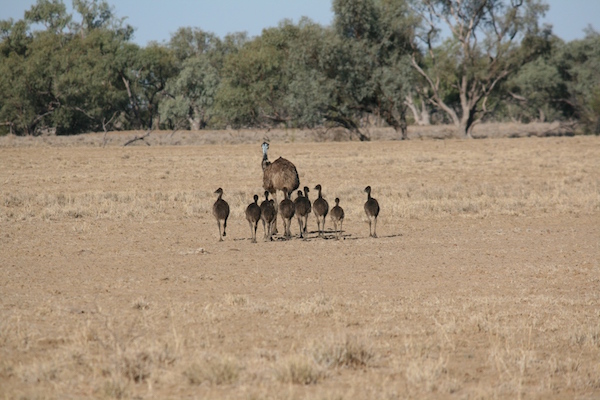 The emu is the largest bird in Australia and the second largest in the world after the ostrich. Emus are found only in Australia. They live in most of the less-populated areas of the continent and although they can survive in most regions, they avoid dense forest and severe desert.
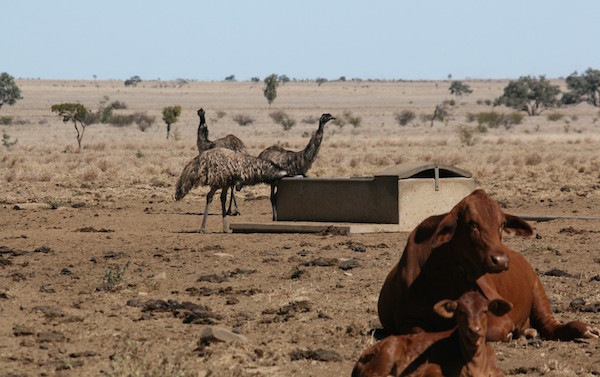 The male is the one who sits on the eggs for eight weeks, until they are ready to hatch. During that time, the male does not eat but uses stored fats as a source of energy.
Emus have been living in Australia for a very long time. Emus must drink every day, and they don’t waste water. An emu swallows small rocks and pebbles to facilitate the grinding of food and accelerate digestion.
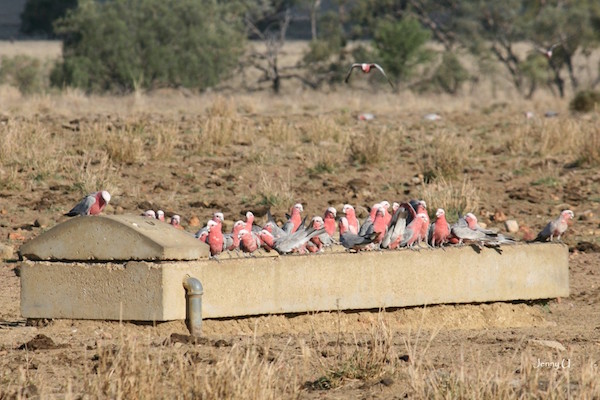 Galahs can often be seen in large flocks of 500 – 1000 birds, although they only have one mating partner for life. Galahs are a common bird in almost all of Australia, and are a type of parrot, specifically a cockatoo.
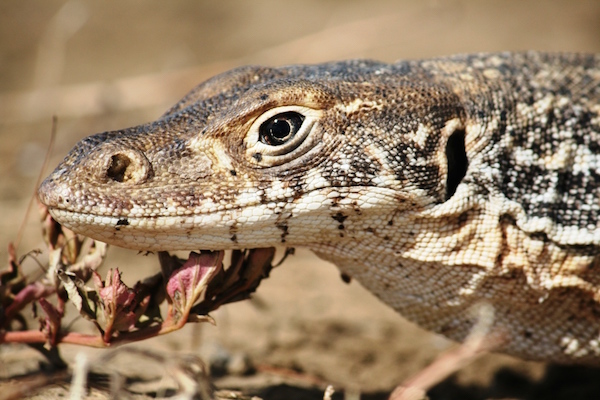 Goannas are solitary creatures except during the mating season which takes place during the spring and summer. Young goannas fend for themselves from the moment of birth. Goannas can survive up to 40 years in the wild.
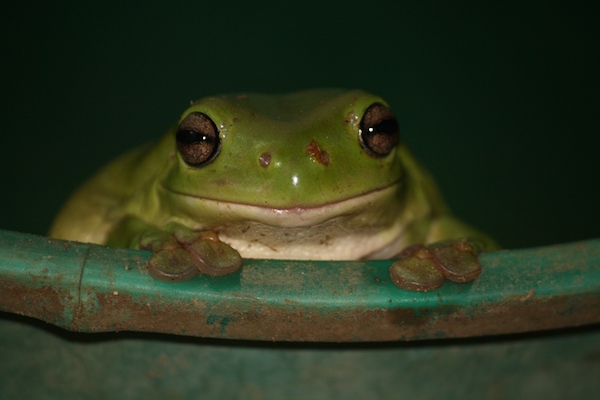 The green tree frog must be one of the most adaptable amphibians in Australia. Despite their name I have yet to see one in a tree; they seem to prefer the company of humans and love to dirty freshly washed windows and bathrooms! Many an unsuspecting guest has been greeted by a green frog in the toilet bowl.
The kangaroo would have to be one of the most instantly recognised Australian animals.
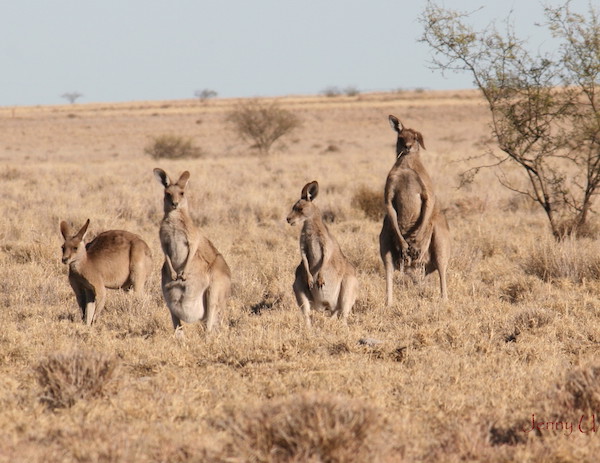 Kangaroos usually have one young annually. The joey remains in the pouch for nine months and continues to suckle until twelve to seventeen months of age. Kangaroos can have three babies at one time.
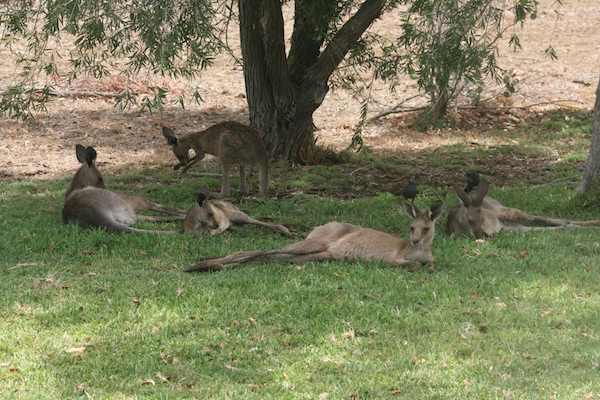 Kangaroos mainly keep cool by licking their forearms. They have an extensive network of blood vessels in their forearms which dilate when body temperature is raised. The saliva evaporates essentially taking the heat from the blood with it.
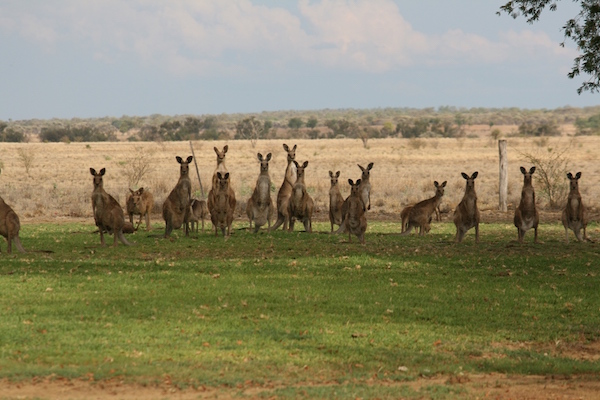 During times of drought it is not unusual to have mobs of kangaroos seek shade on our lawn. Left undisturbed they spend from late afternoon and throughout the night eating the grass.
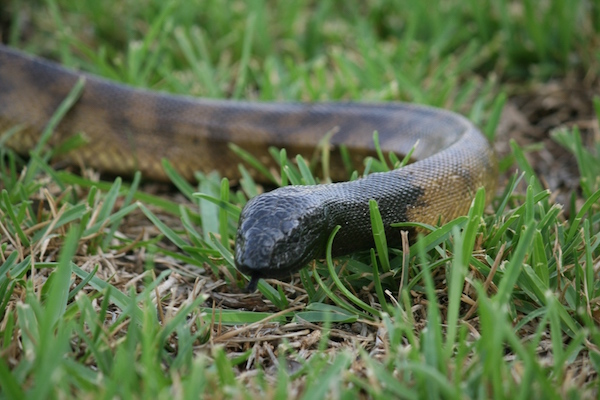 The black-headed python is a non-venomous snake. They are quite docile and often seen around the property and our house.
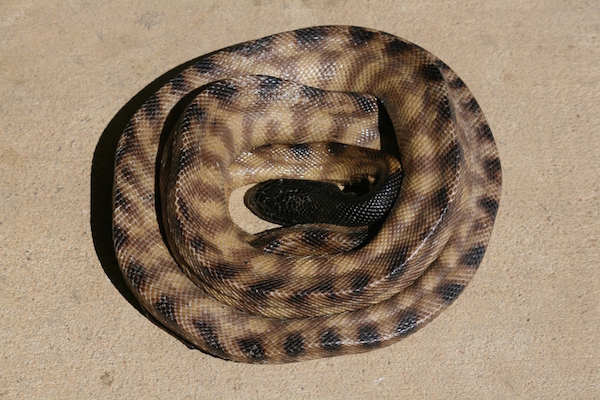 In cooler weather it is not unusual to see them sunning themselves on roads or cement paths.
These are just some of the fascinating marsupials, reptiles, birds and amphibians with which we share our daily lives. We live in harmony with them – by providing them with water, they bring a whole new perspective to our beef breeding operation.